

Wenatchee River Cabin: A Modern Retreat in Nature
The owner purchased this nearly half-acre property to serve as a base camp for outdoor adventures. For 10 years, he camped on site, often with friends, becoming intimately acquainted with the landscape and the region. Just prior to the pandemic, he decided to build, desiring a small cabin that kept the focus on the forest and the river.
As design and construction began and work-from-home became the norm, the owner, who had been living in the greater Seattle area, began spending much more time at the property. Eventually, he opted to live there full-time once the cabin was complete.
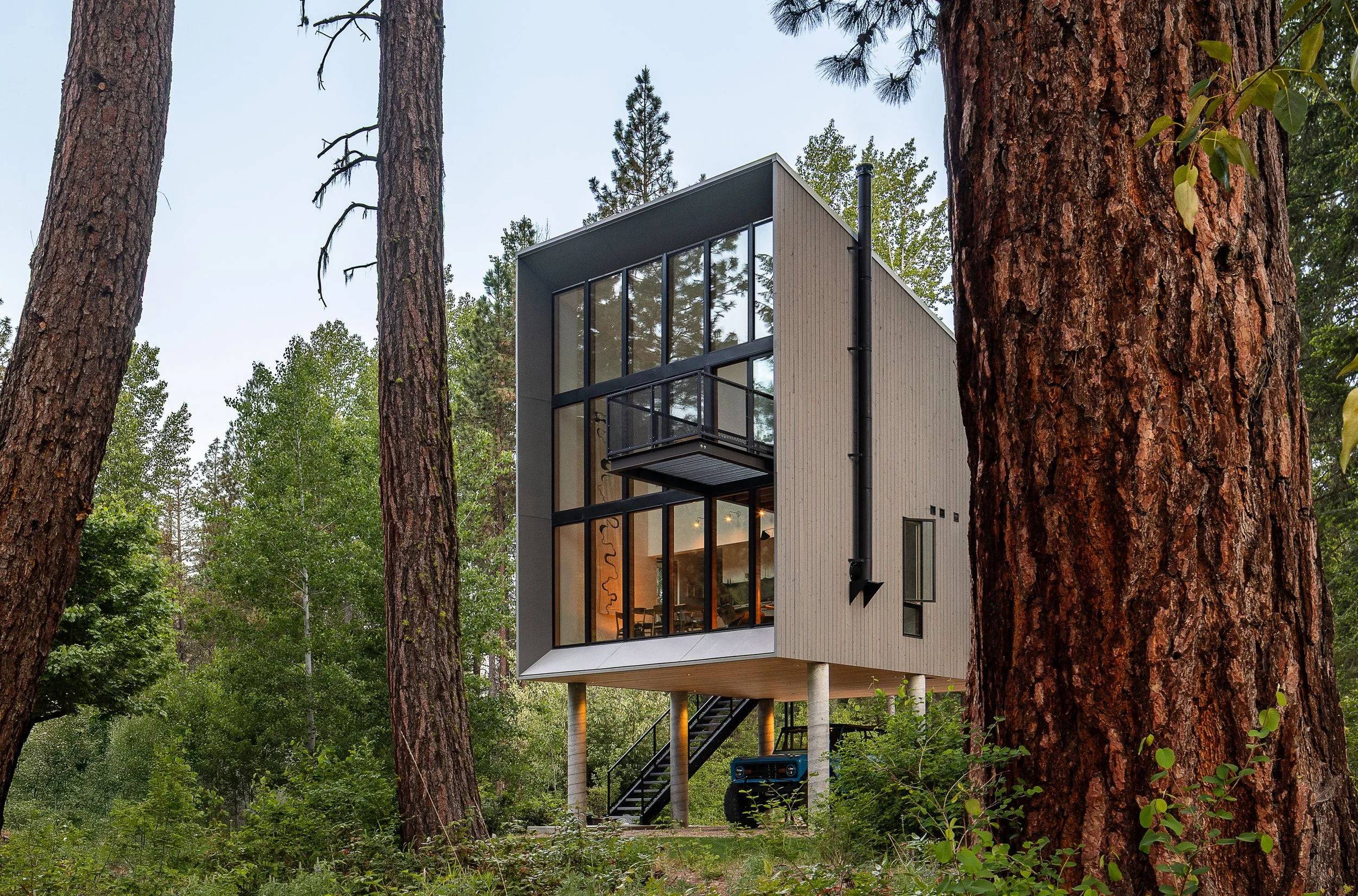
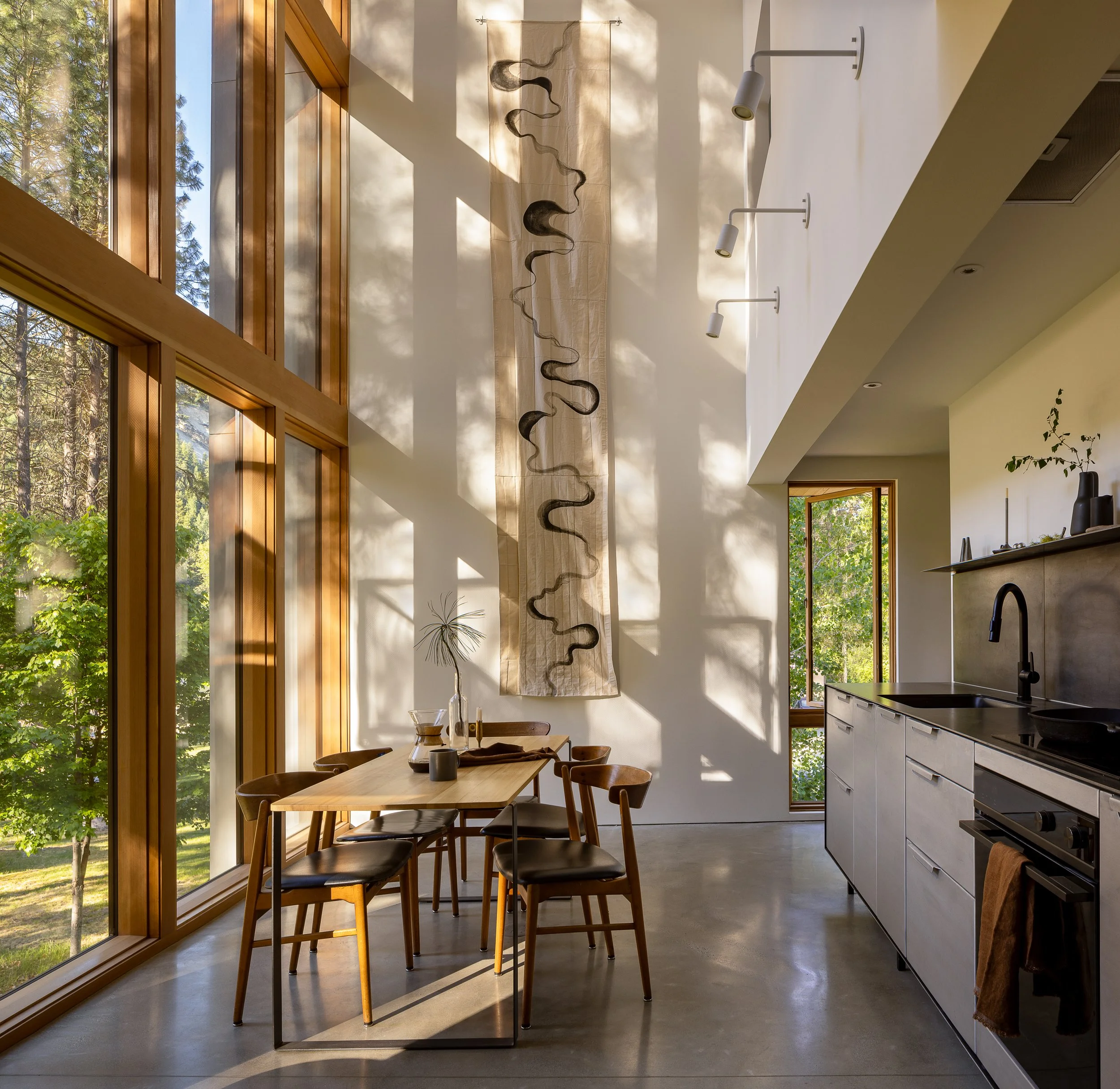
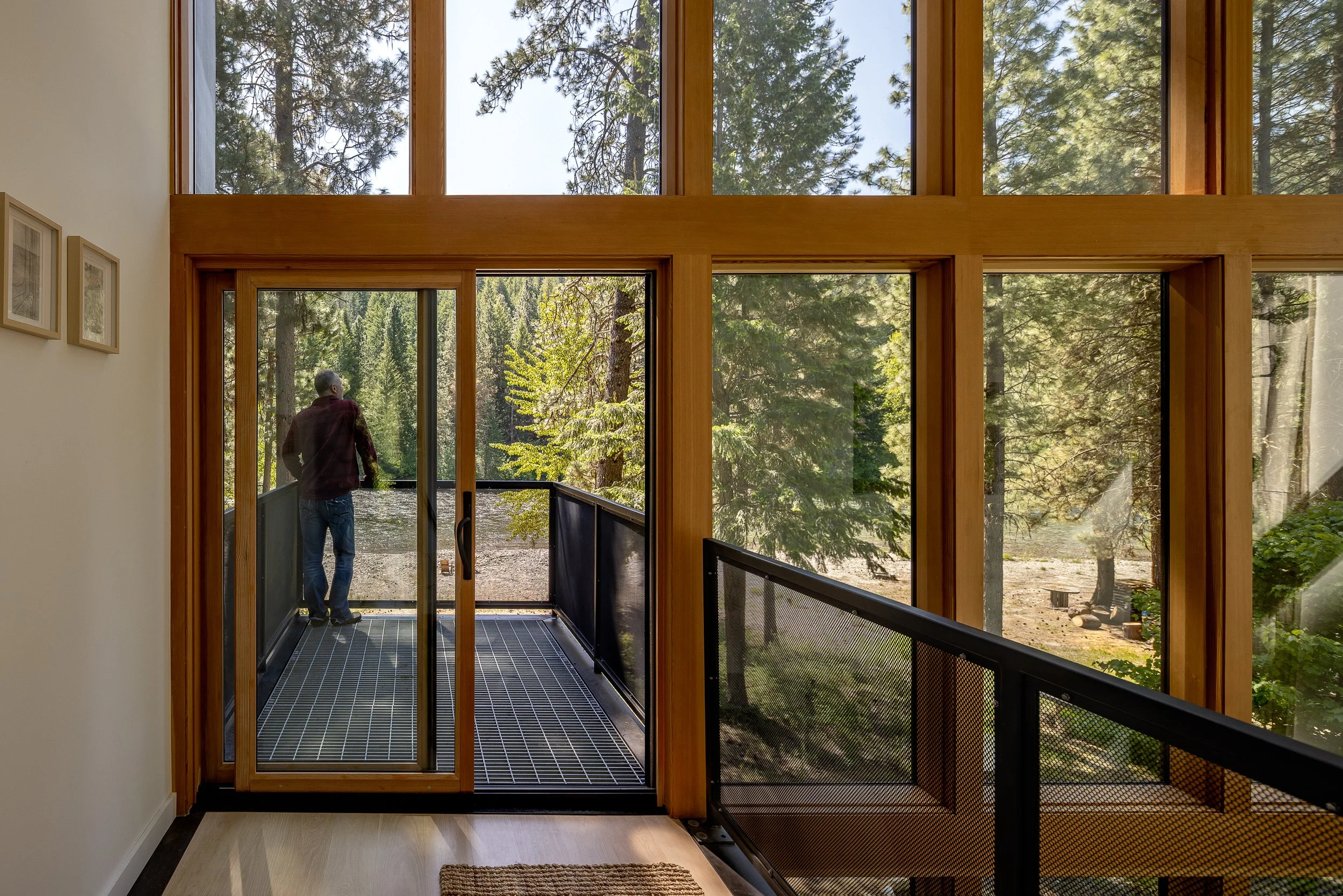
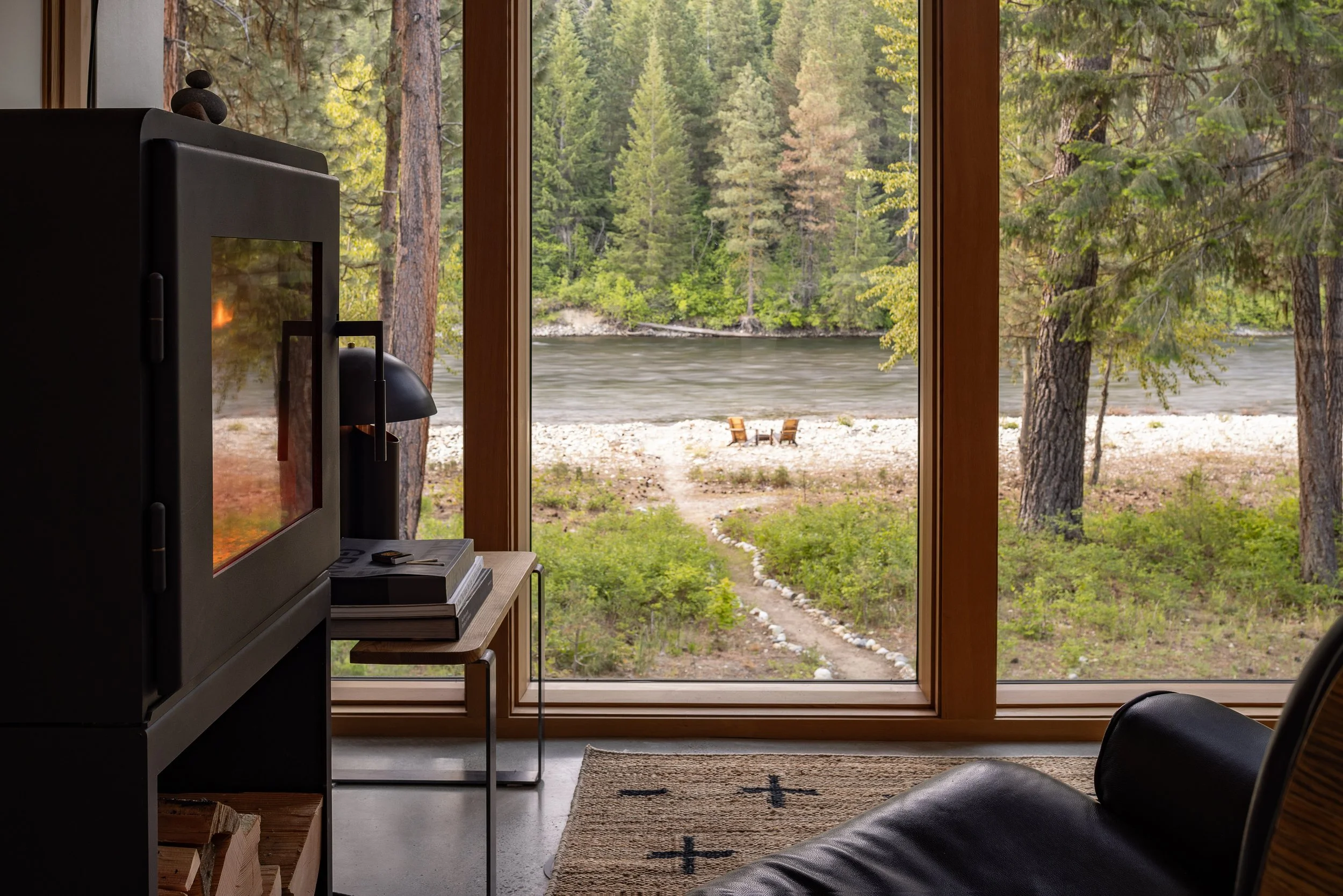
A single, 20-foot-wide by 24-foot-high window wall focuses views toward the river while screening neighboring properties. In the bedroom, a view portal looks over the living room and out to the river beyond.
Owner involvement in construction was a priority, reinforcing the need for a simple and minimal design solution. Designed by Wittman Estes, the modest 746-square-foot, one-bedroom cabin was built with durable materials such as concrete and steel and shaped by the forces of the surrounding Okanogan–Wenatchee National Forest.
“The tiny footprint supports experiences over possessions,” says architect Matt Wittman, noting that the cabin supports living well by living small.
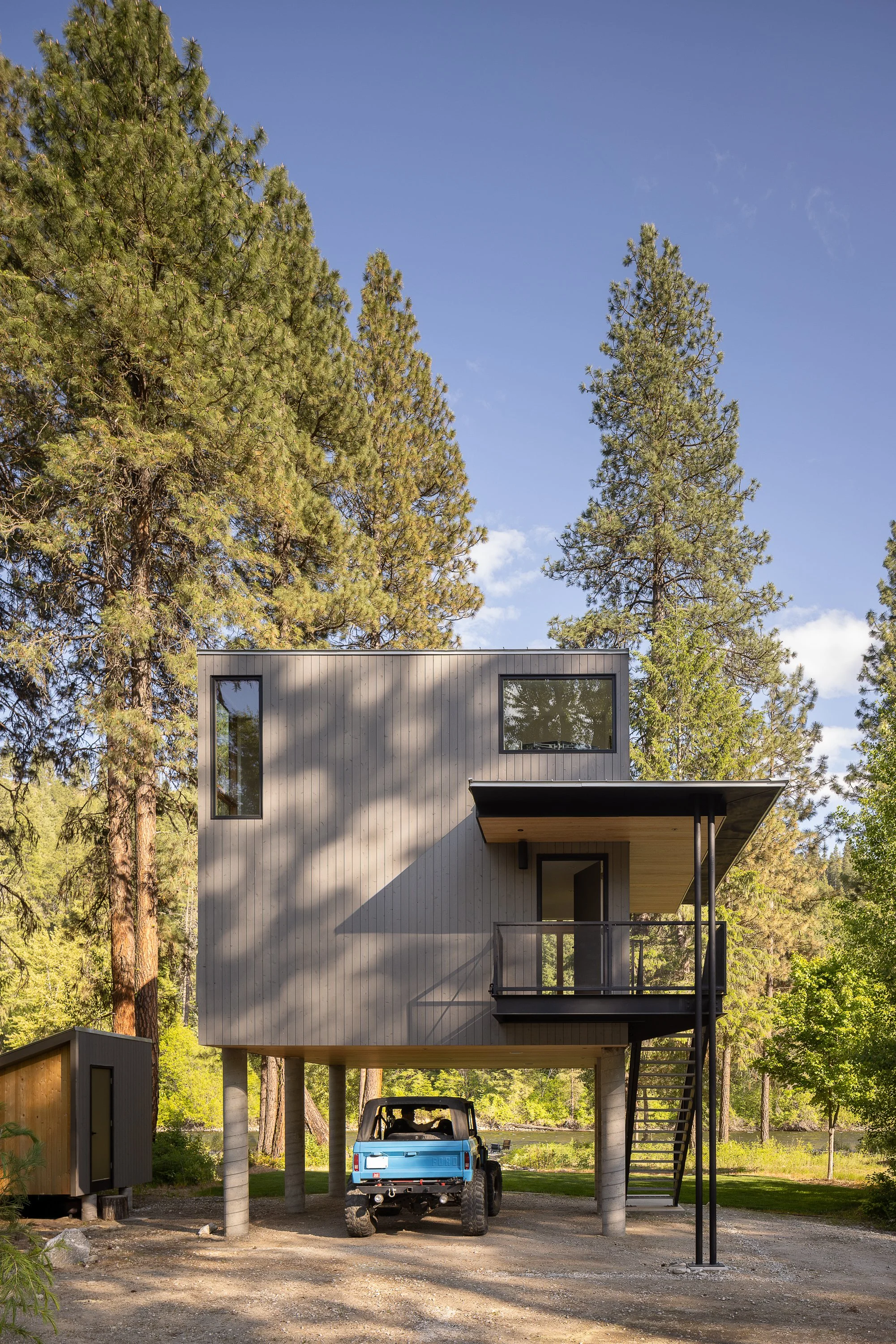
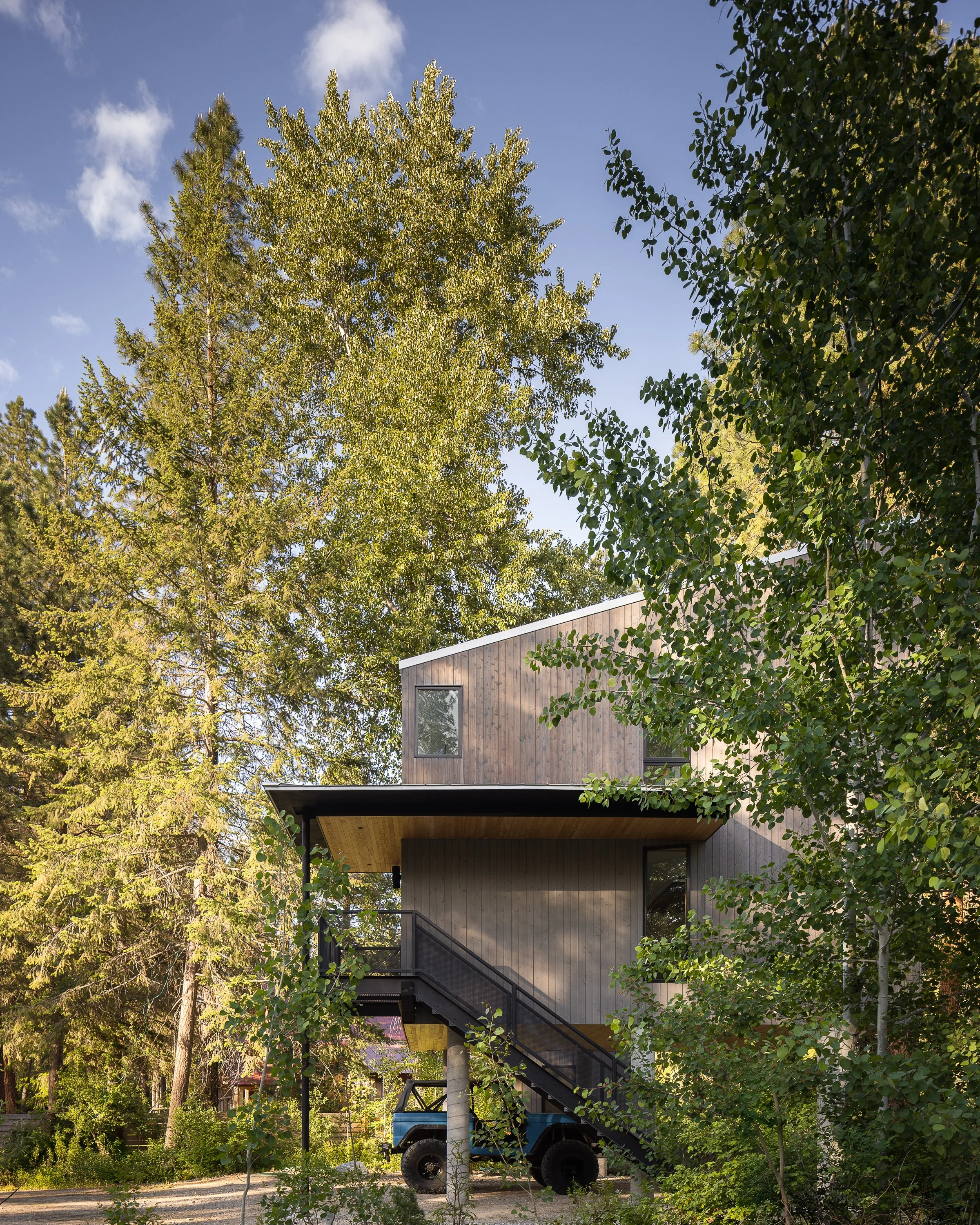
The simple form strikes a harmonious balance between shelter and nature.
Because the cabin sits within the river’s floodplain, the main floor was elevated ten feet above the ground on six concrete columns, providing a resilient response to site conditions.
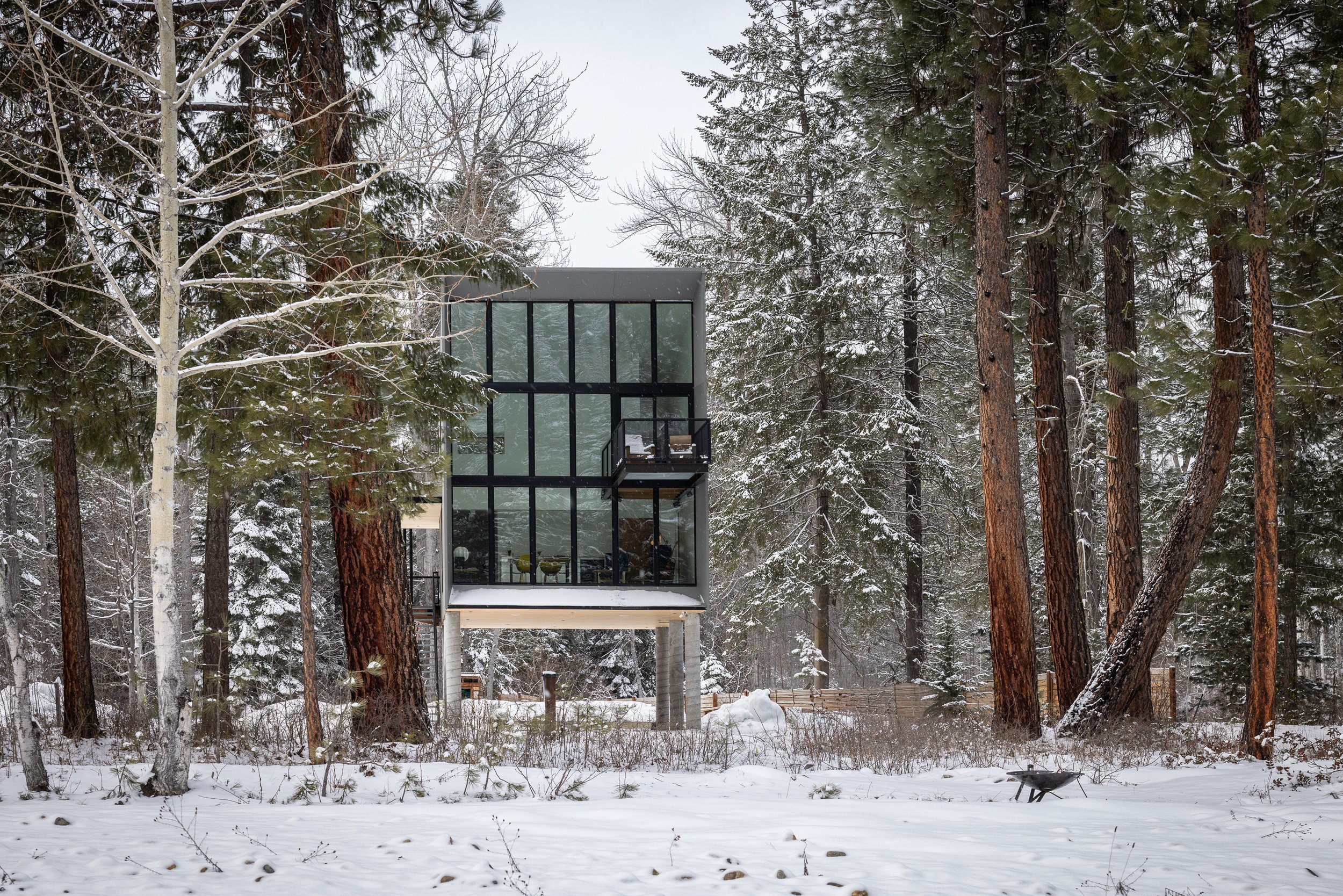
No matter the season, this modern cabin is a year round retreat.
“The façade is unique and iconic when viewed from the river,” the owner notes, adding that he especially values the expansive views both up and downriver from within the cabin.
The cabin is composed of three levels. The ground level provides a covered parking space where the owner can work on his vintage Bronco with protection from rain and snow. The middle level is essentially one large space accommodating the living, dining, and kitchen areas, along with a full bathroom. The top level holds the main bedroom, office, a half-bathroom, and a loft with a cantilevered steel deck.
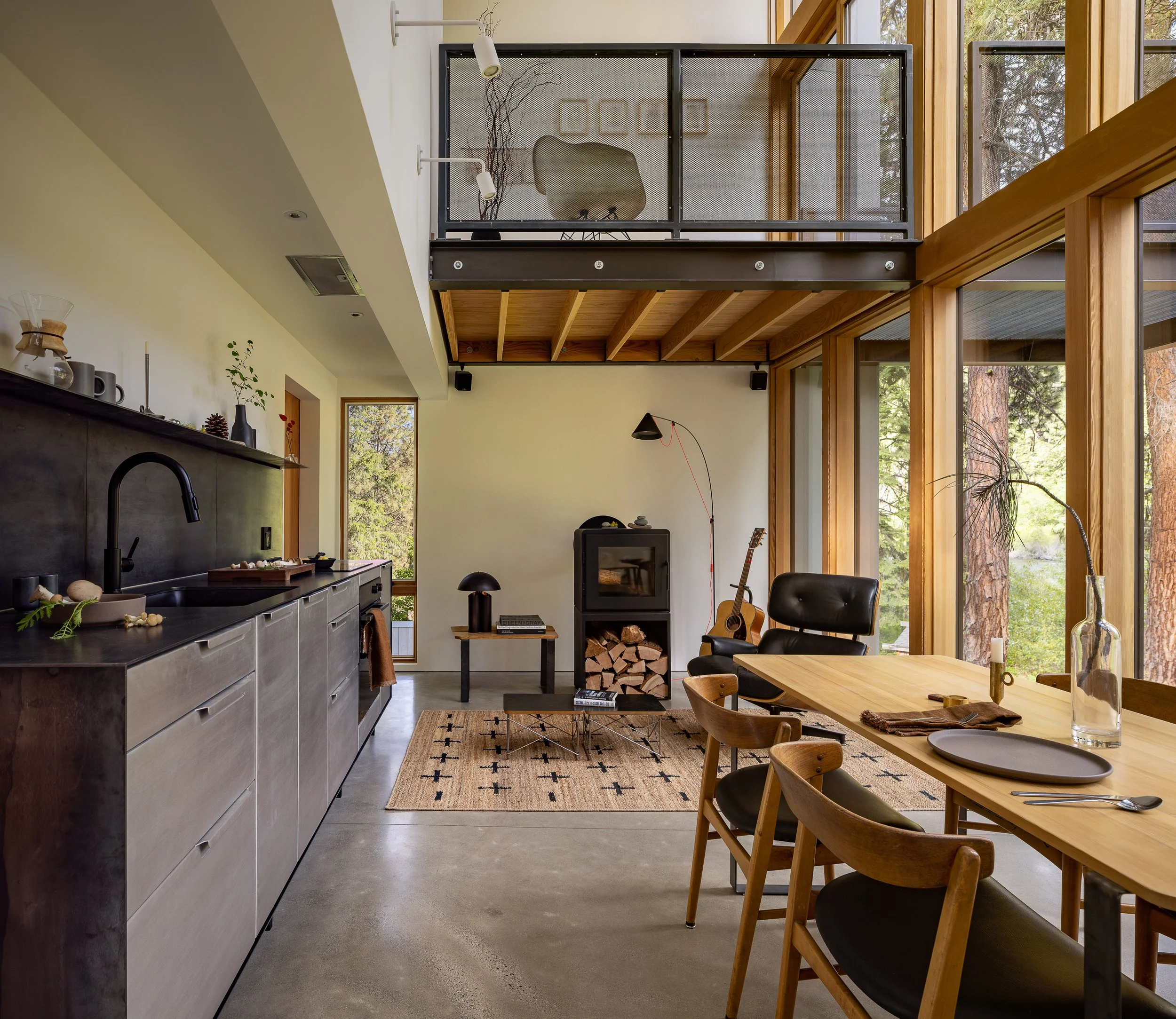
A lifelong metalworker, the owner fabricated the raw steel kitchen countertops and backsplash, the hemlock-and-steel dining table, and the tube-steel and metal-mesh guardrails.
The living space features a cozy, wood-burning fireplace tucked beneath a fir-framed loft. Interior finishes remain intentionally minimal, creating a quiet backdrop for nature, light, and artwork. What was once a one-bedroom weekend cabin has become an idyllic, full-time home.
Wittman Estes design team
Design principal: Matt Wittman
Project team: Julia Frost (design development)
Project team
Architect: Wittman Estes
Structural engineer: JWE Engineering
Builder: Steve Strode Construction and Dan Wheeler
Photographer
Andrew Pogue
