

A Maine Island Retreat Reimagined
Located on a small island off the coast of Maine, this project began as a renovation. Initially, our clients hoped that an existing building on their property could be rehabilitated—a structure that accompanied the 100-year-old farmhouse that has been their summer home for nearly 40 years.
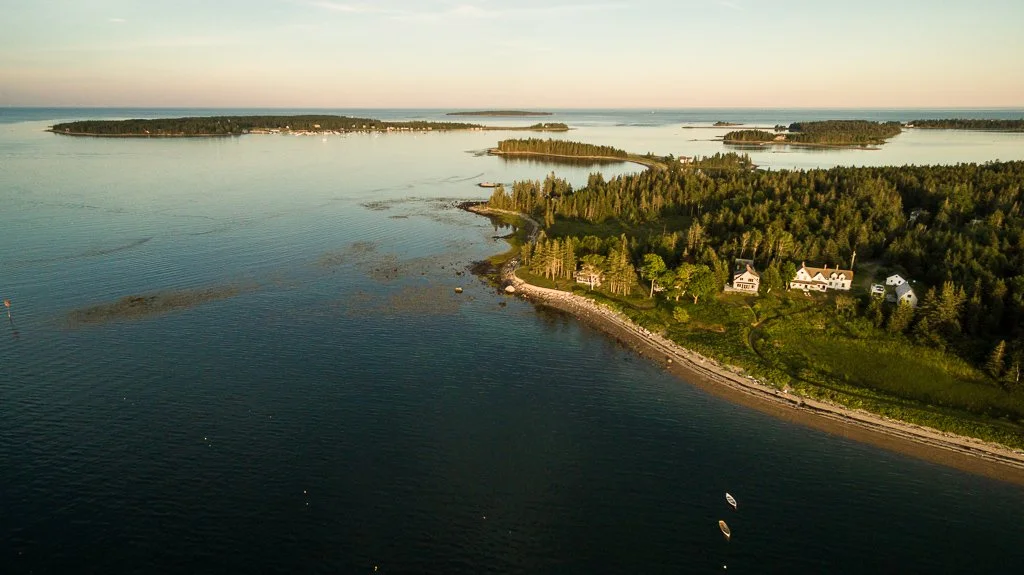
An aerial view of the property on Great Cranberry Island, Maine.
The small, hip-roofed, asphalt-shingled building had been uninhabited and neglected for decades, leaving it in a state of disrepair. While a new structure would more easily meet their needs, it also needed to remain rooted in the traditional style of the region.
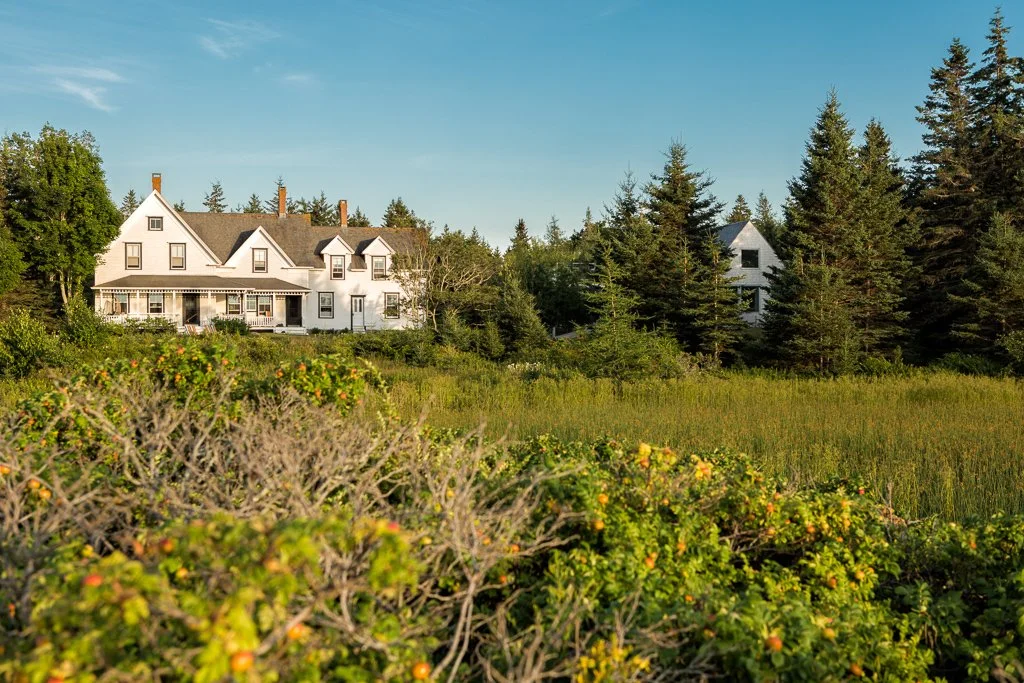
The 100-year-old farmhouse that has been the homeowners’ summer home for nearly 40 years.
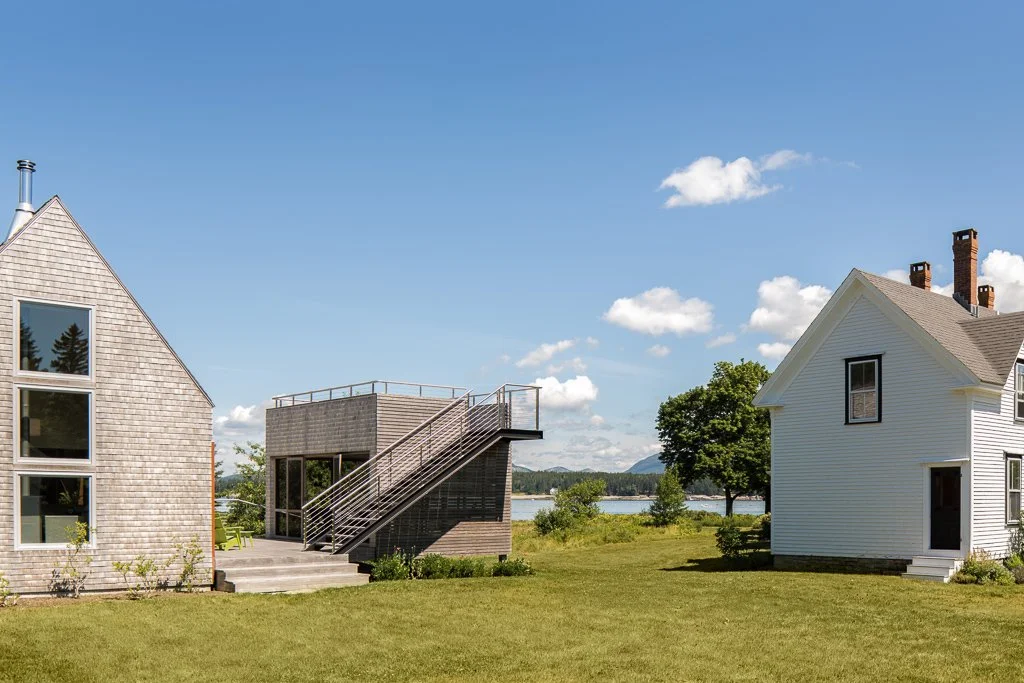
Balancing history and modernity: the old and new structures.

A Modern Interpretation
Collectively we arrived at a concept that is a modern interpretation of New England farm vernacular and establishes a hierarchical relationship between the prominent white clapboard farmhouse and the less adorned, shingled outbuildings.
In order to accommodate multiple generations of the family, the main farmhouse would be given over completely to the young parents and children, and the new house would become the more private space for the matriarch.
Between the two buildings, a series of outdoor lawn spaces and decks was created, along with a screened porch that serves both as a gathering and dining area and as a privacy buffer.
The new house is designed to be small and efficient, yet comfortable enough for year-round use—something the old farmhouse, with its electric heat and poor insulation, cannot provide.
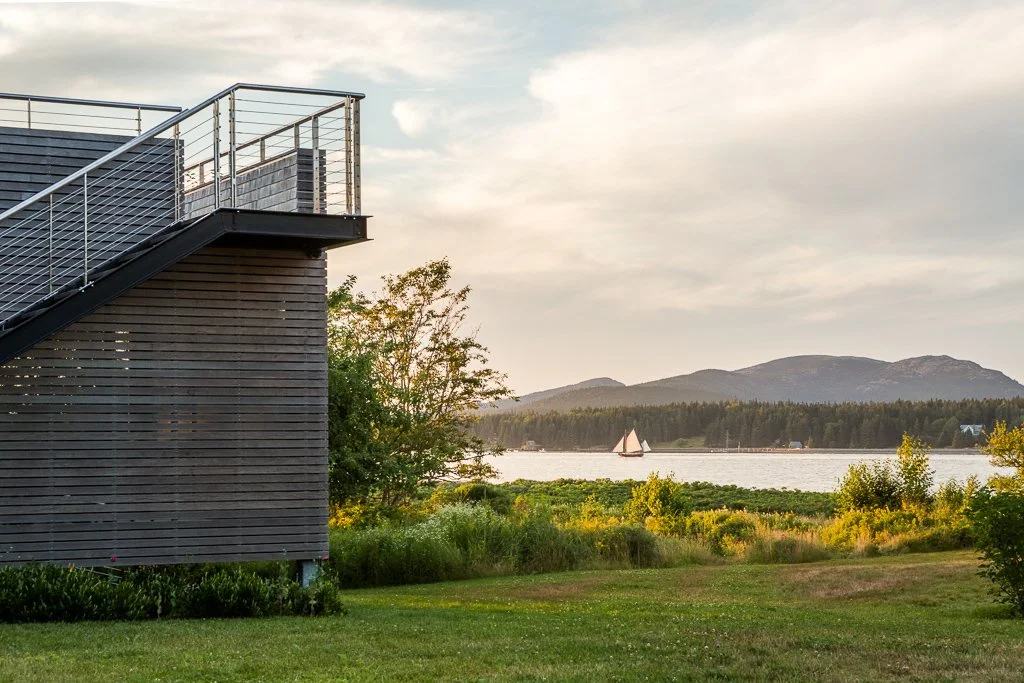

A Seamless Integration
The siting of the new house balances the creation of outdoor spaces with its integration into the rural fabric of the island neighborhood. An ancient public walking path to the shore runs through the middle of the yard. Used by islanders for generations, it is an important part of local tradition—something the owners were adamant should be preserved.
In the end, the path both separates the main house from the new cottage and serves as an organizing element on an already constrained site.
The cottage is entered from a deck that connects it to the screened porch. A utility block containing the entry, bath, and kitchen divides the house into public and private spaces.


The open living/kitchen space fronts the deck, opening onto it through a large sliding glass panel.
The bedroom resides on the opposite end of the core. Quiet and meditative, it is content to gaze upon the spruce forest and ocean beyond, providing respite from the busy summer days.
Note: The architect behind this project is Elliott Architects, whose project, Old Yacht Club, was the winner of our 2024 Design Awards Competition in the Modern Cottage Additions and Renovations category.
In 2022, Elliott’s project, House in Town, also won in the Additions and Renovations category.
Architect: Elliott Architects
General Contractor: Michael Westphal
Structural Engineer: Becker Structural
Lighting Design: Peter Knuppel
Photography by Jeff Roberts